Friday, July 25, 2014

Five private detective must-haves for successful sleuthing

Private investigation requires expertise, intuition, and wit, not to mention a toolkit of spy essentials. Here are some of the most important devices a private eye should never be without.
Tiny video camera
A high-resolution covert digital video camera that can easily be concealed in one’s clothing or personal worn accessories or planted in a clever location in a vehicle or room is vital for surveillance in the event that some hard evidence incriminating a suspect presents itself.
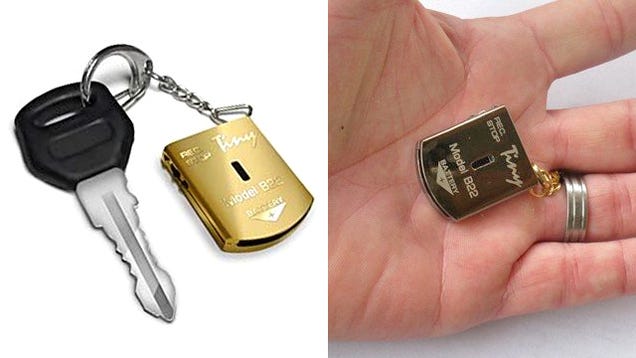
Minuscule audio recorder
Image Source: gizmodo.com
A high quality, high sensitivity digital audio recorder for hiding in strategic areas such as the folds of a coat or the space between couch pillows helps a private detective gather pertinent spoken information or aural proof for nudging a case along.
GPS tracking device
Image Source: bolo411.com
A global positioning system (GPS) tracking unit clipped to a desired subject provides the subject’s exact, real-time location. Being near watching or eavesdropping distance of a subject, or knowing his or her whereabouts can provide material that can shed light on a case.
Surveillance sunglasses
Wire-frame surveillance sunnies keep the sun’s strong glare away while providing the view from behind the wearer via keenly installed mirrors on the inside corners of the lenses.
Binoculars
Image Source: news.bbc.co.uk
Every private investigator must have a pair of high-powered, compact binoculars on his or her person at all times. These allow one to see people and events from a distance, an ability necessary for conducting surveillance.
Following a sixteen-year career in the Narcotics and Organized Crime unit of the New Jersey State Police, Thomas Anthony Zampetti founded and ran a private investigation agency called TAZ, where, as a licensed detective, he carried out and supervised numerous criminal investigations successfully. For more information and resources on surveillance and investigation, follow this Google+ page.

Wednesday, July 2, 2014

Safe sandblasting matters: Measures to protect workers from risks at the workplace

There is no denying that abrasive blasting is a useful process for certain industries. It cleans sand and irregularities from foundry castings, removes paint from ship hulls and other metal surfaces, and polishes tombstones and glass frostings.

image

However, inhaling large amounts of dust from silica and other abrasive materials used in the blasting process poses a great health risk to abrasive blasters. The most common diseases acquired by sandblasters are silicosis and tuberculosis, lung conditions that result in difficulty in breathing, scarring on and blocking of air passages, and death.

Responsible owners of sandblasting companies know there are measures to ensure health and safety in the workplace, such as the following:

image
Image Source: marco.us

Provide PPEs. Require workers to wear protective gear such as the following at the site:

- Open- and close-circuit self-contained breathing apparatuses (SCBA)
- Airline respirator
- Protective coveralls
- Face shield
- Gloves that fully cover the forearm

Also, post signs to warn workers about the hazards to encourage them to wear protective equipment.
Have engineering controls in place. The best thing employers can do to reduce the exposure risk is putting engineering controls, which address the hazards at the source. Some of the controls that can prevent silica exposure include the following:

- Wet abrasive blasting or wet cutting
- Dust control additives
- Installation of dust collection system and local ventilation hoods; and
- Usage of alternative equipment like vacuums or dry sweeping to remove dust and debris

image
Image Source: oteco-eg.com

Maintain safe levels of exposure. Keep exposure as close to zero as possible. Better yet, use alternative abrasive media such as glass beads, pumice, sawdust, steel grit, and walnut shells, that do the job as effectively.

Retired entrepreneur Thomas Anthony Zampetti ensured workplace safety as a former owner of a professional abrasive blasting business. Visit this Facebook page for more information about Mr. Zampetti and the sandblasting industry.

Monday, May 12, 2014

REPOST: Wanted: white-collar crime fighters

At present, there is a huge demand for investigators specializing in finding and exposing white-collar criminals. Gayle Bryant of The Age writes about the rising demand for corporate crime fighters as the prevalence for white-collar crime increases.

Breach of trust: Research shows white-collar criminals are frequently highly placed, experienced staff members.
Image source: theage.com.au

The incidence of white-collar crime is on the rise and as schemes become increasingly sophisticated, companies need to adopt more stringent controls to prevent themselves from becoming victims.

Traditional white-collar crimes include embezzlement, bribery, insider trading, money laundering and accounting fraud. Financial services firm KPMG publishes a bi-annual report into fraud, bribery and corruption and in its most recent survey - released in 2012 - it found $373 million had been stolen over the previous two years in Australia and New Zealand. But figures around white-collar crime vary widely, largely because much of it goes unreported, especially among smaller businesses.

University of NSW professor Clinton Free teaches and researches in the area of fraud and corporate governance. He says asset misappropriation is the most common of the white-collar crimes but the least costly to the organisation. "But financial statement crime, where the incidences are small, is the most costly," he says.

Free says white-collar crimes are very difficult to detect and can take up to three years to investigate. "They occur for different reasons," he says. "Within small to medium businesses, you find that they just haven't got the right internal controls, such as separation of duties, and this opens up opportunities for fraudulent behaviour."

Fraud squad: coporate crime expert Professor Clinton Free of the University of New South Wales.

Fraud squad: coporate crime expert Professor Clinton Free of the University of New South Wales.
Image source: theage.com.au

Within large organisations, he says, crimes often depend on collusion among senior employees and this makes them difficult to uncover.

Free warns against relying on standard audit procedures. "Audits are predictable," he says. "And auditors are not experienced in detecting fraud so it can be easy to work outside the parameters of an audit to keep a fraud undetected.''

Generally, financial offences only come to light through whistleblowers, Free says.

"Crimes get found out when someone in an organisation provides a tip-off or calls a fraud "Crimes get found out when someone in an organisation provides a tip-off or calls a fraud hotline," he says. "This is actually the most effective way of discovering fraud."

But there are tools businesses can use to deter criminally inclined employees. Free says that, as the crimes within SMEs are usually unsophisticated - for example, people transferring company money into their own accounts - internal controls are the easiest form of pre-emption.

"This could involve segregating duties, so that a person who is receiving money is different to the one who is recording it. Jobs can be rotated so no one person is continuously responsible for the same role. And surprise audits that are dedicated to fraud detection should be held," Free says.

But these measures have costs, whether in time or training, and lacking resources, SMEs tend to let them slide. Free says this is a mistake. He says research into white-collar crime shows that it is most often committed by highly-placed, experienced staff members.

"They are not people who have been there for five minutes," he says. "The frauds being conducted are by trusted personnel and you find that in the SME sector, people are more trusting of their employees. So, while putting in controls has costs, so does blind faith.''

In larger companies, fraudulent schemes tend to be more sophisticated and difficult to unpick, especially when they involve different jurisdictions. ''The two entities that are set up to fight this type of crime, ASIC and the Australian Federal Police, have constraints and the complexity makes it difficult to investigate,'' Free says. ''They have limited resources and any prosecutions depend on the quality of the investigation.'' ''

Beyond standard embezzlement, organisations need to be aware of the emerging threat posed by cyber crime, data theft and identity fraud.

KPMG director of forensic technology Stan Gallo says theft of intellectual property (IP) is a growth area. ''Employees might leave a company and start their own business or go to a competitor's and they take tranches of IP,'' he says. ''They just copy it to a thumb drive or save it in the cloud. It's easy for them to do because they've always had access to this information.''

Gallo says data-related crimes are a concern because of the value of the data. ''Management can't be complacent. If technology needs change, for example, if employees are given tablets, then management need to rethink policies on access to information. The line between what is private and what is business becomes blurred when people start using the same mobile phones and tablets at work and home.''

Working to defeat white-collar crime is garnering more attention around the world. For example, the US-based Association of Certified Fraud Examiners is the largest anti-fraud body in the world, with 70,000 members.

Gallo says the growing awareness among companies is good news. ''Organisations are seeing the ramifications of ignoring white-collar crime, especially around IP theft,'' he says. ''This is bringing it out of the IT department and to the attention of management and board executives so company-wide decisions can be made. It's a recognition that [it's] more than just an IT issue.''

Thomas Anthony Zampetti has been a Marine, a New Jersey State Trooper, and a private detective.  Visit this Twitter page for more updates on the private investigator career.


Wednesday, April 9, 2014

Case closed: Life after a detective's career

After years of fighting crime, solving mysteries, and being involved in the legal process, what’s it like when a detective calls it a career?

Image Source: intothewoods.tv
A detective enjoys numerous opportunities at the conclusion of his or her service. With a life’s work solving crime, former detectives often turn to careers related to their old jobs.

Becoming a crime journalist, novelist, or screenwriter is a natural career path for a former detective. Examples of detectives-turned-writers include Ed Burns, a screenwriter for the television series “The Wire,” and Mark Fuhrman, author of several non-fiction books.

Image Source: theguardian.com
Some have found jobs acting in films and television. Gil Hill, a former detective in Detroit, landed a role in the “Beverly Hills Cop” series, where he played Inspector Todd, the boss of Eddie Murphy’s character, Alex Foley.

Other former detectives started private businesses in connection to their old occupation. Dave Toschi, the chief investigator of the Zodiac Killer case, is currently the vice president of North Star Security Services in Daly City, Calif.

Image Source: zodiackillertruth.com
Still, others had success in completely different livelihoods. Thomas Zampetti was a former narcotics detective in New Jersey when he opened a sand blasting business. His company met success for being one of the first to introduce portable sand blasting in the industry.  

Thomas Anthony Zampetti served in the New Jersey State Police for 16 years before becoming a successful detective and businessman. To find more information about Mr. Zampetti, subscribe to this Google Plus page.

Saturday, March 29, 2014

After semper fi: Thomas Anthony Zampetti’s post-Marine career

Having served in the U.S. Marine Corps until 1970, Thomas Anthony Zampetti embarked on a range of successful career moves. Not long after his retirement from the Marines, Zampetti took up accounting at Fairleigh Dickinson University in Madison, New Jersey, finishing in 1974.

Image Source: www.ohio.com
He would later set off on a career in law enforcement, serving as a New Jersey state trooper fighting organized crime and narcotics trafficking. He would later use his experience in police work to become a licensed private detective. For a time, he worked closely with a high profile attorney, focusing mainly on criminal investigation, before starting an agency on his own, which he would later name TAZ Detective Agency. His time as a detective was shared with his day job, managing a sandblasting company, American Sand Blasting.

Image Source: www.ntctroopers.com

His venture into the sandblasting industry was marked by a pioneering streak in the way sandblasting was applied in restoration, cleaning, and artisan crafts. His company invented the very first portable sand blasters, and was among the first sandblasting companies to be allowed to sandblast inside buildings, paving the way for its foray into designing glass windows for residential and commercial structures.

Image Source: www.miningindustrialphotographer.com

His company was also renowned for its work in restoration, which focused on historical and commercial projects. Among the most lauded works the company performed was in removing graffiti from school walls.

For more updates on Thomas Anthony Zampetti, follow this Twitter page.